
 Posted by
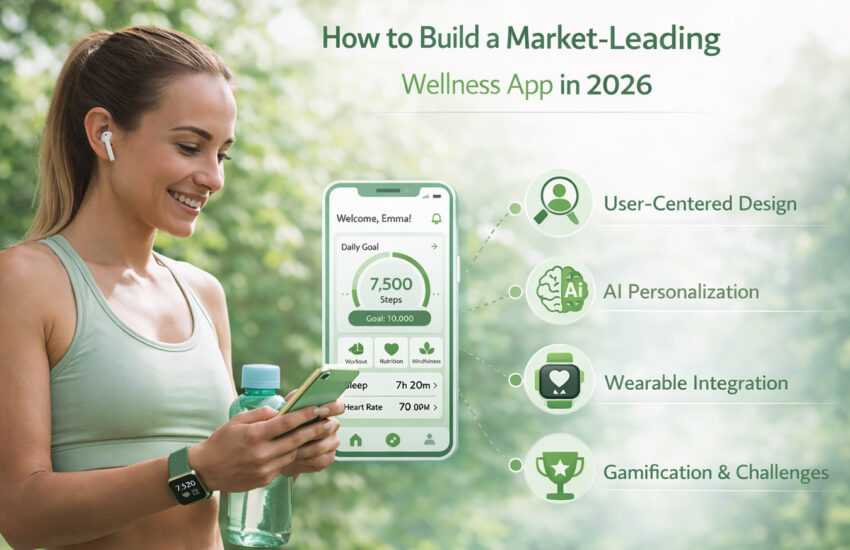
 The wellness industry has been expanding faster than ever before, with people wanting to keep track of everything from their mental health, fitness, sleep, and nutrition. To cater to this rapidly increasing customer base, having a custom-made, smart, and result-driven wellness app is the right way. Simply launching an app is not enough in 2026; if you plan to stand out in the crowd, you need the right strategy, features, and technology. Despite thousands of wellness apps available today, most struggle to retain users or deliver real results. because the target audience expects intelligent experiences personalized to their goals, routine, and lifestyle.
In this blog, we are going to discuss a wellness app development guide that explains how to build a wellness app with a mobile app development company.
Understanding the Wellness App Market in 2026
With the technically evolving times, the requirement for wellness apps has also evolved. They are no longer needed just for counting steps or keeping track of calories. Users are now actively looking for smart solutions that offer a perfect combination of physical and mental health. If you want to succeed in this industry, you ought to offer an app that solves real user problems and delivers valuable results.
Major shifts that have been noticed in 2026:
- AI-powered personalizaton
- Integration with wearables and smart devices
- Data privacy and compliance
- Long-term wellness programmes
- Community building and engagement
7 Best Practices for Wellness App Design
The step-by-step wellness app development process that you must follow to drive high ROI is given below.
Step 1: Define Your Target Audience
Defining your niche and target audience is the most critical step in building a market-leading wellness app in 2026. The common reason why many apps fail is that they try to cater to everyone and end up connecting with no one. Clear positioning helps you understand your audience better. A clear target helps you:
- Build focused and targeted features
- Stronger marketing performance
- Reduce competition
- Increase user engagement and retention
Step 2: Identify Must-Have Features
In the haste of incorporating every feature into your app, you can end up complicating things and impacting your user retention rate. The features that you choose to include in your app should have a perfect balance of innovation and simplicity, which differentiates your platform from competitors. Some of the core features are:
- Personalized wellness goals
- Activity, mood, and calorie tracking
- Progress reports and insights
- Push notifications and reminders
Step 3: Easy-to-Navigate Interface
In wellness apps, the UX/UI design significantly impacts your user experience and retention. Your interface should be designed in such a way that it is not confusing and can be navigated by people of different age groups easily. The interface should feel supportive, instead of being cluttered and overwhelming users. Some of the best practices are:
- Minimal text and clean layouts
- Easy navigation with one hand
- Clear progress indicators
- Dark mode for eye comfort
Step 4: Ensure User Privacy
Wellness apps collect sensitive information such as health habits, mood data, sleep patterns, and sometimes medical details. Because of this, user trust is extremely important and non-negotiable. Apps that prioritize data privacy and security have higher chances of long-term success and establish customer loyalty. Some compliance practices are:
- Collect only necessary user data
- Give users control over their information
- Regularly update security systems
- Clearly display privacy policies during onboarding
Step 5: Moneitze your Wellness App
A leading wellness app is not just popular but also profitable. Choosing the right wellness app business model depends on your target audience, user engagement levels, wellness app features and benefits. The right monetization strategy helps you grow sustainably while continuing to deliver value to users. Top monetization strategies are:
- Subscription plans (monthly or annual)
- Free model with premium features
- Virtual coaching or expert sessions
- Included recommendations for wellness products
Step 6: Use Effective Marketing Strategies
Even after following the above mentioned practices successfully, there are chances of your app not succeeding if you fail to market effectively and spread awareness about your product in the target market. Focus on educating your audience, as the majority of wellness users trust brands that inform, not just sell. Some of the effective marketing strategies are:
- Influencer marketing
- Social media reels and short videos
- Email and push notifications campaigns
- SEO-driven content marketing
Step 7: User Engagement Strategies
Attracting new customers is more expensive than retaining the existing ones. That is why, after launching a wellness app, the same amount of focus should be paid to user engagement as to other strategies. Apps that have strong engagement metrics come on top in app store rankings. Some of the high-performing retention strategies are:
- Personalized weekly insights
- Gamification and streaks
- Regular feature updates
- Feedback-based improvements
Final Thoughts: An App That Serves Users, Succeeds Faster
If you want to build a leading wellness app in the healthcare industry, just having good ideas and overloading the app with features is not going to cut it. You need proper audience understanding, integration of smart technology, user-friendly designs, and a business model that you can scale and evolve along with the rapidly evolving wellness industry. The most successful wellness apps in 2026 are built around people, not trends.
As a leading wellness app development company, MMF Infotechs helps you create an app that users trust, love, and recommend by focusing on personalization, compliance, user experience, and long-term engagement.