
 Posted by
 In the fast-evolving world of e-commerce, staying ahead with an effective Amazon SEO strategy is essential for sellers who want sustainable visibility and sales growth in 2026. The A10 algorithm updates have transformed how products appear in search results, moving beyond basic keyword matching to prioritize buyer intent, conversion performance, and real-world signals. Sellers who master these changes can achieve higher placements without relying solely on paid ads, turning consistent optimization into a competitive advantage.
Whether you’re a new seller or scaling an established brand, understanding the updated Amazon A10 algorithm ranking factors and Amazon product ranking factors is key to long-term success. By focusing on proven tactics like targeted keyword research and listing enhancements, you can improve click-through rates, conversion rates, and overall ranking momentum. This approach not only drives immediate traffic but also builds organic authority that compounds over time.
Decoding the Amazon A10 Algorithm Updates in 2026
The Amazon A10 algorithm has evolved significantly by 2026, shifting from a sales-velocity-heavy model to one that heavily weights customer-centric signals and AI-driven intent matching. Updates emphasize sustained performance metrics over short-term spikes, incorporating semantic search layers like COSMO to better understand buyer queries beyond exact keywords. This means listings that align with real shopper needs now rank higher, rewarding detailed, helpful content and external validation.
These changes reduce over-dependence on aggressive advertising while amplifying organic factors such as engagement and seller reliability. Sellers applying a smart Amazon SEO strategy see improved visibility when their products demonstrate consistent sales velocity, low return rates, and strong buyer interaction. Adapting early to these Amazon A10 algorithm ranking factors positions your listings for stable, long-term growth in a more competitive marketplace.
Top Amazon Product Ranking Factors After the A10 Updates
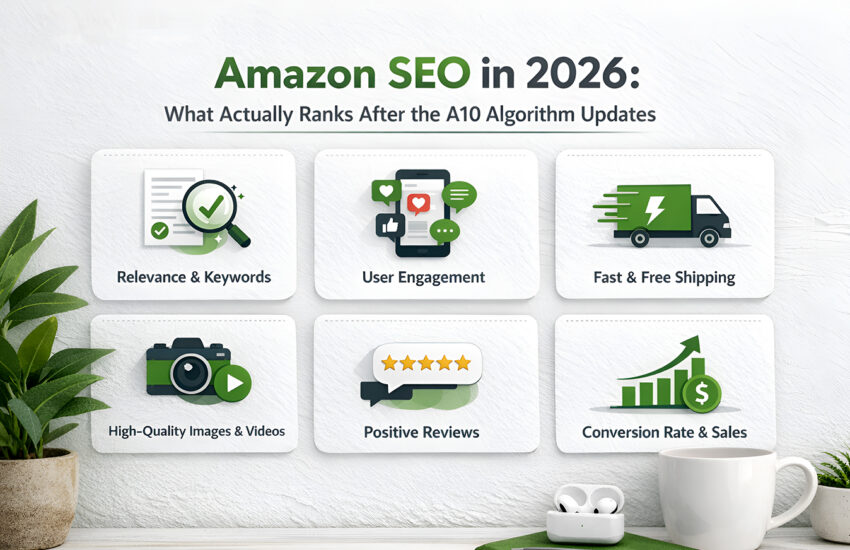
Post-A10 updates, the core Amazon product ranking factors revolve around relevance, performance, and trust signals that the algorithm now evaluates holistically. Keyword relevance remains foundational, but it must pair with high click-through rates from optimized titles and images, plus conversion rates that outperform category averages. External traffic that converts on Amazon further boosts rankings by signaling genuine demand to the system.
Additional Amazon product ranking factors include inventory stability to avoid suppression penalties, review quality with helpful votes carrying more weight than sheer quantity, and overall seller authority through account health metrics. Key elements that drive rankings include:
- Consistent sales velocity without artificial spikes
- Mobile-optimized primary images for better thumbnail performance
- Pricing discipline to maintain perceived value
- Structured backend attributes for accurate AI categorization
- Engagement from Q&A and A+ content modules
These factors, when optimized together, create compounding momentum for higher organic placements.
Mastering Amazon Keyword Research Strategy in 2026
An advanced Amazon keyword research strategy goes far beyond volume hunting in 2026, focusing instead on buyer intent and long-tail phrases that align with the A10 algorithm’s semantic capabilities. Tools and data analysis now reveal high-conversion opportunities by mapping searches to specific use cases, attributes, and problems shoppers aim to solve. This targeted approach ensures your listings surface for queries that drive actual purchases rather than mere impressions.
Successful sellers integrate seasonal trends, competitor gaps, and backend search term fields to maximize indexing without stuffing. By prioritizing natural language variations and discovery attributes, your Amazon keyword research strategy feeds directly into better categorization and ranking potential. Combining this with ongoing performance tracking keeps your terms fresh and relevant amid algorithm refinements.
Implementing Amazon Listing Optimization Strategy for Maximum Impact
Your Amazon listing optimization strategy must now deliver readable, benefit-focused content that satisfies both shoppers and the A10 algorithm’s AI evaluation. Titles should front-load primary keywords within the first 70 characters while staying under 200 characters total, avoiding restricted symbols or stuffing to prevent flags. Bullet points and descriptions need to address objections, highlight features with emotional triggers, and incorporate long-tail terms naturally for enhanced relevance.
High-resolution images, including lifestyle shots and infographics, play a critical role in lifting click-through and conversion rates under current rules. A+ Content modules further amplify engagement when used to tell your brand story visually. A comprehensive Amazon listing optimization strategy that aligns all elements—titles, bullets, images, backend fields, and structured data—directly improves visibility and sales velocity for stronger organic rankings.
How Performance Metrics Drive How to Rank on Amazon
Learning how to rank on Amazon in 2026 requires treating performance metrics as primary ranking signals rather than secondary outcomes. The A10 algorithm rewards steady conversion rates, click-through rates, and sales velocity consistency, using these to validate listing quality against category benchmarks. Products demonstrating reliable buyer engagement and low bounce rates gain progressive visibility boosts over time.
Inventory continuity, competitive pricing stability, and positive customer satisfaction indicators like review velocity further strengthen your position. By monitoring these metrics weekly and adjusting listings accordingly, sellers build ranking momentum that outlasts temporary promotions. This data-driven method of how to rank on Amazon ensures sustainable growth through organic channels while minimizing reliance on constant ad spend.
The Role of Amazon Account Management in Ranking Success
Strong Amazon account management directly influences visibility by maintaining high seller ratings and low order defect rates that feed into the A10 algorithm’s trust layer. Timely customer responses, consistent shipping performance, and proactive issue resolution build authority signals that elevate product rankings across keywords. Brands with clean account health avoid penalties and unlock better indexing opportunities.
Effective Amazon account management also includes Brand Registry enrollment for enhanced protection and content tools, plus careful monitoring of feedback and return metrics. When paired with your overall Amazon SEO strategy, these practices create a foundation of reliability that the algorithm interprets as long-term value. Sellers who treat account health as a core ranking element see fewer fluctuations and stronger organic performance year-round.
Leveraging External Traffic in Your Amazon SEO Strategy
External traffic has become one of the most powerful levers within any Amazon SEO strategy following the A10 updates, as converting visitors from Google, social media, or influencer channels validate market demand to the algorithm. Driving qualified off-platform traffic through targeted campaigns or content marketing creates a positive feedback loop that improves organic rankings without inflating ad costs. This approach proves especially effective for new listings seeking initial momentum.
Integrating Google SEO tactics and landing pages that funnel users to Amazon listings amplifies the effect, turning external sources into ranking accelerators. Sellers who track conversion from these channels and optimize accordingly gain an edge in buyer intent signals. Incorporating external traffic thoughtfully into your Amazon SEO strategy delivers compounding benefits that traditional on-platform tactics alone cannot match.
Navigating Amazon SEO in 2026 demands a balanced approach that combines precise keyword targeting, listing excellence, performance monitoring, and external validation to truly stand out after the A10 algorithm updates. By applying these Amazon A10 algorithm ranking factors and Amazon listing optimization strategy techniques consistently, sellers can achieve higher placements, better conversions, and scalable growth in a competitive environment.
Partner with MMF Infotech to implement a customized Amazon SEO strategy tailored to your catalog and goals. Their expertise in Amazon keyword research strategy, listing enhancements, and account management ensures you stay ahead of algorithm shifts while maximizing organic rankings and revenue potential.