
 Posted by
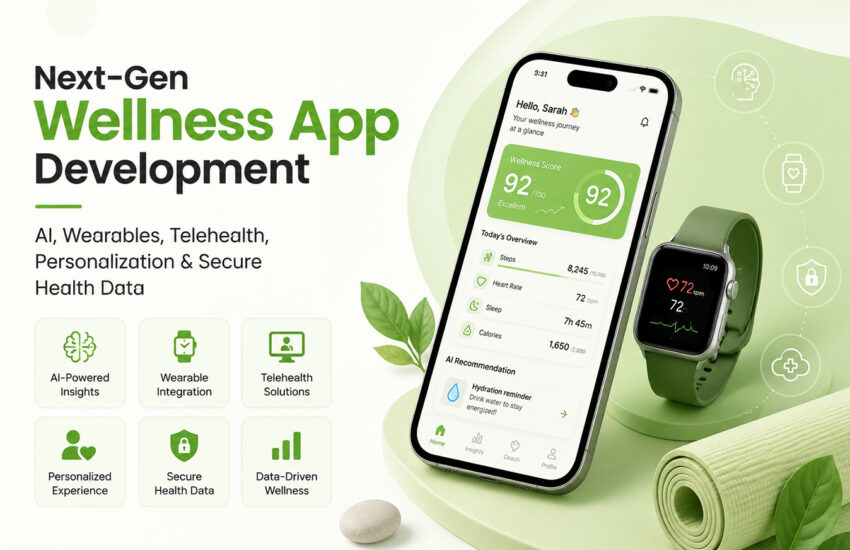
 If you’re planning a wellness app for users in India or the USA, don’t start by adding every feature your competitors have. Start with one clear health outcome, then connect AI, wearable data, personalization and telehealth around that outcome. Wellness app development works best when technology reduces user effort while keeping health data secure, explainable and useful.
A modern wellness platform might combine sleep and activity tracking, AI recommendations, wearable synchronization, virtual consultations and personalized wellness plans in one experience. But these features also introduce difficult product decisions around consent, interoperability, platform limitations and regulatory obligations. India’s Digital Personal Data Protection framework and US health-data rules can affect architecture depending on how your app collects, uses and shares information.
What should you build first in a wellness app?
Build the smallest useful wellness journey first, then expand into AI, wearables and telehealth after validating user behavior. A focused MVP usually gives you better product feedback than launching with ten disconnected health features.
For example, suppose you’re building an app for working professionals who want better sleep. The first version could include onboarding, sleep goals, habit tracking, reminders and a progress dashboard. Wearable synchronization can follow once you know which metrics users actually use.
A practical development sequence is:
- Define one target audience and measurable wellness outcome.
- Design the core user journey and MVP.
- Add secure health-data collection and consent management.
- Integrate wearables or health platforms that support the required data.
- Introduce AI recommendations using validated data inputs.
- Add telehealth only when provider workflows justify it.
- Test security, performance, accessibility and edge cases before launch.
This approach also aligns with the way MMF Infotech describes its mobile development process, starting with business needs, application functionality, design and testing rather than simply coding features. Its broader mobile app design and development services cover iOS, Android, wearable, Flutter, React Native and UI/UX development.
How does AI improve wellness app development?
AI in wellness apps should convert user and device data into useful recommendations, not simply add a chatbot. AI healthcare app development can support pattern detection, personalized content, habit recommendations and risk signals, but AI output should not automatically be treated as medical diagnosis.
For instance, an app could combine sleep duration, activity patterns and user-set goals to recommend an earlier bedtime or a lighter evening routine. The value comes from the quality and context of the inputs, not from putting “AI” on the feature list.
This distinction matters because health-related AI can introduce bias, transparency and oversight concerns. HHS has specifically highlighted the need for responsible handling of patient-generated data and greater attention to accountability and bias in health-related AI applications.
A good architecture should therefore define what AI is allowed to recommend, what requires professional review and what should simply be displayed as information.
Why are wearables important for wellness apps?
Wearables turn a wellness app from a manual tracking tool into a more continuous health and lifestyle platform. Wearable app development can connect smartphones with smartwatches, fitness bands and other devices to collect relevant metrics without requiring users to enter everything manually.
Useful integrations may include activity, sleep, heart rate or other supported metrics. The exact data available depends on the device, operating system, permissions and platform APIs, so “supports all wearables” is rarely a realistic product requirement.
This is where architecture decisions become important. MMF Infotech’s wearable development offering covers smartwatches, bands and other connected devices, along with integration, UI/UX, development and maintenance.
A common product mistake is integrating multiple devices before deciding which health signals actually affect the user journey. More data can create a more complicated dashboard without creating more value.
How can telehealth fit into a wellness app?
Telehealth app development adds remote interaction between users and healthcare professionals through capabilities such as appointments, secure messaging and video consultations. It makes sense when your business model includes professional guidance rather than only self-directed wellness content.
For a nutrition platform, for example, users might track meals and goals before booking a consultation with a dietitian. A fitness or preventive-care platform could use assessments and progress data to prepare information for a professional session.
Telehealth also changes the security and operational requirements of the product. You may need role-based access, appointment workflows, secure communication, professional dashboards and appropriate records management. In the USA, HIPAA applicability depends on the organization’s role and how the app handles protected health information. HHS also notes that HIPAA does not automatically apply to every consumer health app.
What makes a personalized wellness app actually useful?
A personalized wellness app should change recommendations based on relevant user context instead of showing the same plan to everyone. Personalization can use goals, preferences, behavior, progress and permitted health data to make the experience more relevant.
The important trade-off is between personalization and user control. Asking for every possible health permission during onboarding may produce more data, but it can also reduce trust and increase abandonment. Ask only for information that supports a clearly explained feature.
MMF Infotech’s recent wellness development guidance similarly emphasizes personalized experiences, AI-driven insights, wearable integration and health dashboards as core elements of modern wellness platforms.
For businesses planning a larger product, personalization should also be designed as a system. Your backend needs consistent user profiles, event tracking, recommendation logic and permission controls so the experience can evolve without rebuilding the entire app.
How should wellness apps handle health data security?
Health data security should be designed into the architecture from the first sprint, not added immediately before launch. Authentication, authorization, encryption, secure storage, auditability and controlled data access all need to match the type of information your platform handles.
For Indian users, the Digital Personal Data Protection Act, 2023 provides the statutory framework for processing digital personal data, while the Digital Personal Data Protection Rules, 2025 establish implementation requirements and phased commencement provisions.
For US-facing products, don’t simply label an app “HIPAA compliant” because it stores health information. HHS explains that HIPAA obligations depend on whether an organization is a covered entity or business associate and on the circumstances in which protected health information is handled.
Your security checklist should therefore cover:
- Data minimization and clear consent
- Strong authentication and authorization
- Encryption in transit and at rest
- Role-based access controls
- Secure API and third-party integrations
- Audit logging and monitoring
- Backup and recovery procedures
- Privacy notices and data-retention policies
- Security testing before and after launch
Should you choose Android, iOS or cross-platform development?
Choose the platform strategy according to your audience, device integrations and product complexity. Android app development can be particularly important for an India-focused consumer product, while iOS can be strategically important for specific US audiences and Apple-device ecosystems.
MMF Infotech’s Android development service covers strategy, UI/UX, testing, integrations, upgrades and maintenance, making it relevant if Android is your initial launch platform.
If your product needs both platforms from the beginning, cross-platform development can reduce duplicated application work. However, wearable and health-platform integrations may still require platform-specific implementation, so don’t assume one codebase means every feature behaves identically.
What is the practical development roadmap?
The safest roadmap is to validate the product before investing heavily in advanced integrations.
Phase 1: Define the target user, wellness outcome, business model and MVP.
Phase 2: Design onboarding, core tracking, dashboard, notifications and account management.
Phase 3: Build secure backend services, APIs, authentication and consent flows.
Phase 4: Add selected wearable integrations and validate the quality of incoming data.
Phase 5: Introduce AI personalization after enough reliable data exists to make recommendations meaningful.
Phase 6: Add telehealth workflows if your business requires professional consultations.
Phase 7: Run functional, security, performance and device testing before launch.
This staged approach is especially useful because AI, wearable integration and telehealth each add technical dependencies. Building them all simultaneously can make debugging and cost control considerably harder.
Build a wellness app around the user’s real journey
The strongest wellness products don’t win because they have the longest feature list. They win because users understand what to do next, receive useful feedback and trust the platform with their information.
If your current idea is still a collection of features, turn it into a defined user journey first. Then map the required AI, wearable, telehealth and security components around that journey. MMF Infotech also maintains a dedicated Next-Gen Wellness App development resource covering AI personalization, wearable integration, telehealth and preventive wellness features.
For businesses that need help moving from concept to a secure, scalable healthcare mobile app, the logical next step is to discuss the target users, core workflows, integrations and platform requirements with an experienced development team. A focused discovery phase can identify what should be built now, what should wait and which compliance requirements apply to your specific product.
Frequently Asked Questions
Q1. How much does wellness app development cost in India?
Ans. There is no single reliable price because cost depends on platforms, design complexity, integrations, AI, telehealth, security and backend requirements. Current industry estimates vary widely. Treat published ranges as planning references rather than quotes, and define the MVP scope before requesting a development estimate.
Q2. What features should a wellness app have?
Ans. A strong first version can include onboarding, user profiles, wellness goals, activity or habit tracking, personalized content, notifications and progress dashboards. Advanced products can add wearable synchronization, AI recommendations, subscriptions, community features and telehealth based on the business model.
Q3. Is HIPAA required for every wellness app?
Ans. No. HIPAA applicability depends on the organization, its relationship with covered entities or business associates, and how protected health information is handled. Consumer wellness apps outside those relationships may fall under other privacy requirements instead. A US-facing product should be assessed based on its actual data flows and business relationships.
Q4. Can a wellness app integrate with smartwatches?
Ans. Yes, but the available data depends on the device, operating system, permissions and supported APIs. Wearable integration should be planned around the specific metrics your product needs rather than assuming every smartwatch exposes identical health information.
Q5. How does AI personalize wellness recommendations?
Ans. AI can analyze permitted user data, behavior and goals to identify patterns and generate recommendations. The system should define boundaries for recommendations, validate inputs and provide appropriate explanations. AI-generated wellness guidance should not automatically be presented as a medical diagnosis.
Q6. Should I build Android and iOS apps at the same time?
Ans. It depends on your target audience and product requirements. If India is your primary launch market, Android may deserve priority. If your US audience heavily depends on Apple devices or Apple health integrations, iOS may be equally important. Cross-platform development can also be considered where platform-specific functionality doesn’t dominate the product.